Introduction
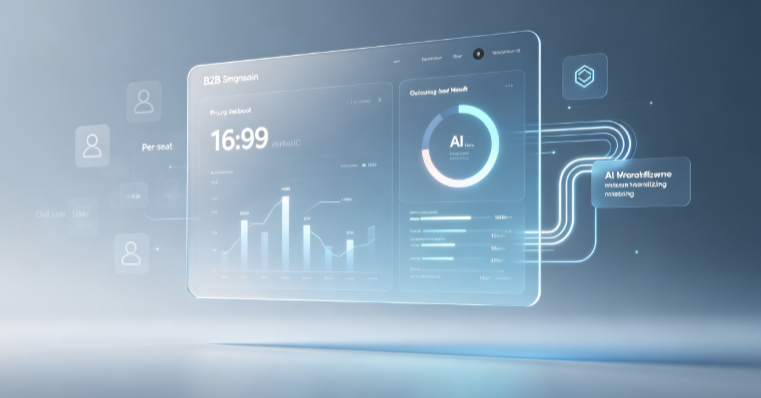
For years, SaaS pricing was simple: charge per seat. Every user paid a monthly fee, and the business scaled as more team members joined. But AI has changed the equation. In 2026, customers are no longer paying for access to software. They are paying for the work AI actually performs. This shift is rewriting the rules of AI SaaS monetization.
Per-seat pricing worked well when software was primarily a tool for human users. But AI agents, automation workflows, and embedded intelligence do not need human seats. They run in the background, complete tasks at scale, and create value that is difficult to measure by user count. For customers, paying per seat for AI feels increasingly unfair. For vendors, it limits growth, creates friction, and fails to capture the true value of AI capabilities.
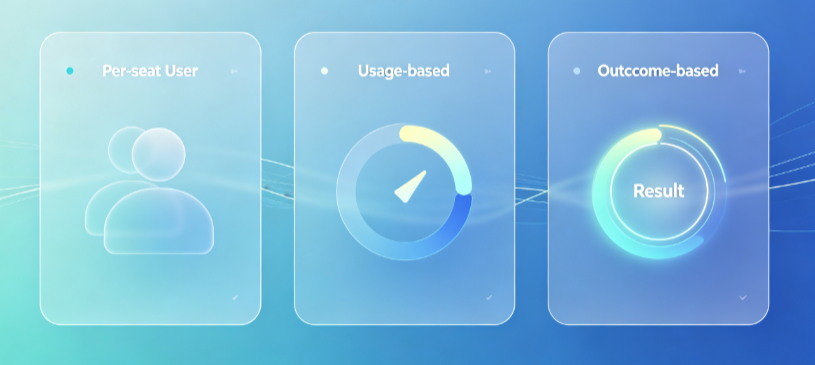
The result is a new set of monetization rules. AI SaaS products are moving from per-seat models to hybrid pricing, usage-based billing, and outcome-based contracts. Those that adapt will capture more value. Those that do not will struggle to justify their price.
Why Per-Seat Pricing No Longer Fits AI SaaS
Per-seat pricing assumes that more users equal more value. That was true for email tools, project management platforms, and CRM systems. But AI SaaS does not always work that way. A single user might trigger hundreds of automated actions. A team of five people might run an AI agent that replaces the work of twenty. In that scenario, per-seat pricing becomes a poor proxy for value.
Customers already feel this disconnect. They see AI tools generating documents, processing support tickets, or running marketing campaigns without requiring constant human login. Paying the same price for AI-powered features feels like paying for empty seats. This creates two problems: customers resist renewing, and vendors leave money on the table.
The issue is not that per-seat pricing is dead. It is that it is no longer the default. In 2026, successful AI SaaS products combine per-seat access with other pricing signals that reflect actual usage, output, and business impact.
The New AI SaaS Monetization Rules
The first new rule is to price based on output, not just access. If an AI SaaS tool generates reports, resolves tickets, or completes workflow tasks, customers should understand what they are paying for. This means moving from “user pays” to “action pays.” For example, a support AI might charge per resolved ticket. A marketing AI might charge per generated campaign or delivered lead.
The second rule is to use hybrid pricing models. Many customers still want predictable costs. Pure usage-based pricing can create bill shock. The best AI SaaS vendors combine a fixed subscription layer with variable usage limits. Customers pay for access and then pay more when the AI delivers additional output. This balances predictability and value capture.
The third rule is to align pricing with business outcomes. The most powerful AI SaaS monetization in 2026 does not charge for features or usage alone. It charges when the customer achieves a measurable result. This might include reduced support cost, faster sales cycles, or higher conversion rates. Outcome-based pricing is harder to implement, but it builds stronger trust and justifies higher margins.
How AI SaaS Vendors Can Adapt
For AI SaaS vendors, the first step is to understand what customers actually value. If the customer pays for faster workflows, price the tool around completed tasks. If the customer pays for better team access, keep a per-seat layer. If the customer pays for revenue impact, consider outcome-based contracts.
The second step is to build transparent billing. Customers hate hidden overage fees. AI SaaS products should clearly show usage, limits, and cost before the invoice arrives. Transparency increases trust and reduces churn, even when pricing is variable.
The third step is to offer tiered value, not just tiered features. Instead of adding more AI buttons to higher plans, create plans that reflect higher output, better automation, or stronger business results. A basic plan might include limited AI actions. A business plan might include higher volume and deeper integrations. An enterprise plan might include custom AI agents and outcome guarantees.
What Customers Want From AI SaaS Pricing
Customers do not necessarily want cheaper AI SaaS. They want fair pricing. They want to know that the cost matches the value received. They also want flexibility. A small business might prefer low usage-based pricing. A mid-sized company might prefer a hybrid plan with predictable monthly costs. An enterprise might want outcome-based contracts that align with ROI.
The mistake many vendors make is assuming customers want lower prices. In reality, customers want clearer value. If an AI tool reduces support costs by 30%, a customer will pay more. But if the pricing model is disconnected from that result, they will not.
Conclusion
Per-seat pricing is not dead, but it is no longer the default for AI SaaS. In 2026, successful monetization will be based on output, usage, and business outcomes. Vendors that continue to rely only on per-seat pricing will find it harder to justify their value. Customers will ask why they are paying for seats when AI is doing the work.
The new AI SaaS monetization rules are simple: understand what customers value, price accordingly, and be transparent about how cost relates to result. If you can do that, you will not only charge more fairly. You will also build stronger customer relationships, reduce churn, and capture the real value AI creates.