Introduction
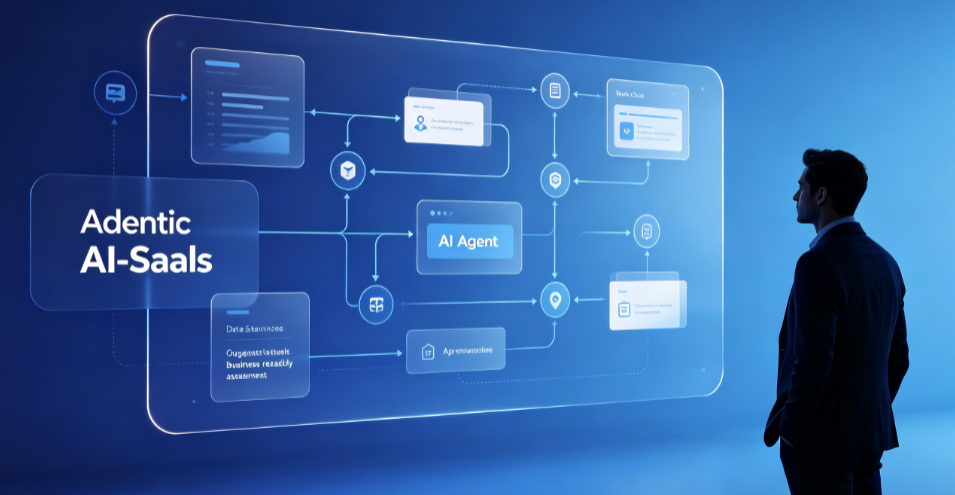
By 2026, AI is no longer just a feature inside SaaS tools. It is becoming a system that acts on behalf of businesses. Agentic AI SaaS platforms do not just suggest responses or generate summaries. They plan, execute, and complete tasks across multiple tools with minimal human input. This shift is changing how companies operate, but it also raises a critical question: is your business ready?
Many organizations have already adopted AI tools. Yet adoption does not equal readiness. Agentic AI requires more than a subscription. It demands clean data, clear workflows, strong governance, and a culture comfortable with automated decision-making. If these foundations are missing, AI agents can create bottlenecks, increase risk, and deliver less value than expected.
The agentic AI SaaS revolution is not about being first to adopt. It is about being able to deploy AI safely, scalably, and profitably. Before investing further, businesses should assess whether their people, processes, and systems are actually prepared.
What Agentic AI SaaS Changes for Your Business
Traditional SaaS tools help humans work more efficiently. Agentic AI SaaS systems do work. They can draft a response, send it for approval, update a CRM record, schedule a follow-up, and report the outcome — all without a human clicking through each step. This is a fundamental difference.
For business leaders, the upside is clear. Agentic AI can reduce repetitive work, speed up internal processes, and free teams to focus on higher-value decisions. But the risks are also real. If AI agents act without clear guardrails, they can send incorrect messages, create data errors, or expose sensitive information. They can also amplify bad processes. A poorly designed workflow run by AI becomes a poorly designed workflow run faster.
In 2026, the competitive advantage will not come from using AI. It will come from using AI agents that are reliable, auditable, and aligned with business goals.
The Three Pillars of Agentic AI Readiness
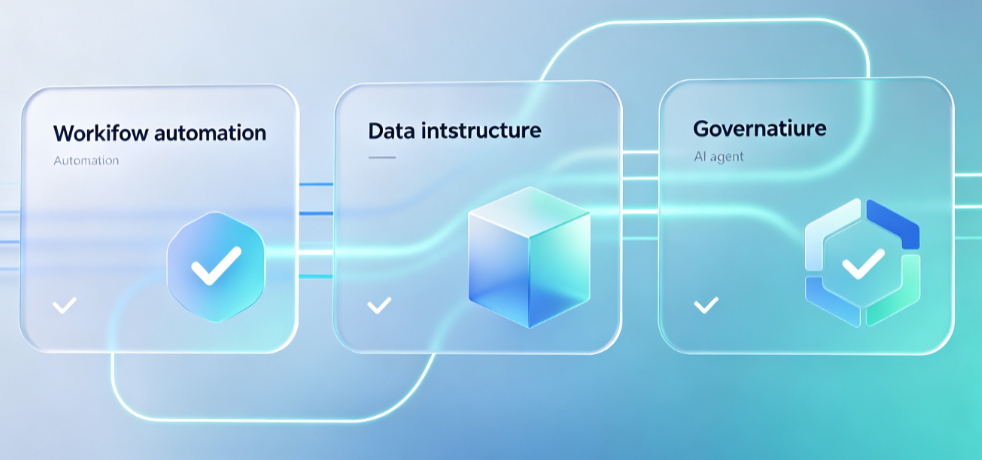
Before adopting agentic AI SaaS, businesses should evaluate three pillars: data infrastructure, workflow clarity, and governance.
First, data infrastructure matters more than ever. AI agents need access to accurate, structured, and connected data. If customer records are scattered across tools, if product information is out of date, or if data is siloed between teams, AI agents will struggle to make correct decisions. Readiness starts with cleaning, connecting, and governing the data that AI will use.
Second, workflows must be clear enough to automate. Agentic AI excels at repetitive, well-defined tasks. It struggles when processes are ambiguous, unwritten, or change every week. Businesses that want to deploy AI agents should first map their most reliable workflows, identify bottlenecks, and decide which steps can safely be automated.
Third, governance is non-negotiable. Agentic AI can take actions that affect customers, finances, and compliance. Businesses need clear rules about what AI can do, when it needs human approval, and how its decisions will be reviewed. Without guardrails, AI agents can create serious operational and reputational risk.
Why Most Businesses Are Not Fully Ready
Many businesses think they are ready because they already use AI chatbots, AI writing tools, or AI analytics. But those tools are reactive. They respond to user requests. Agentic AI is proactive. It initiates actions, which requires a different level of trust and control.
A common mistake is adopting AI agents before fixing broken processes. If your team already struggles with inconsistent handoffs, unclear approvals, or outdated data, AI will not solve those problems. It will only scale the same problems faster.
Another mistake is treating AI agents as a project rather than a new operating layer. Agentic AI SaaS should not be siloed in one department. It should be integrated into how the business operates. This requires leadership alignment, cross-functional planning, and long-term investment, not just a tool purchase.
How to Test Your Readiness Without Overcommitting
You do not need to deploy agentic AI across your entire business in 2026. You can start small and measure carefully.
First, choose one high-frequency, low-risk workflow. For example, you might test AI agents in meeting follow-ups, invoice matching, or basic customer ticket triage. These tasks are repeatable, measurable, and less damaging if something goes wrong.
Second, set clear success metrics. Do not measure usage alone. Measure whether the AI reduces time spent, improves accuracy, or frees up team capacity. If the AI does not deliver measurable value in one area, do not scale it to another.
Third, build human oversight into every step. Even the best AI agents make mistakes. Businesses should start with human-in-the-loop systems, review AI actions regularly, and only reduce oversight when reliability is proven.
Conclusion
The agentic AI SaaS revolution is not something to chase blindly. It is a shift that rewards businesses with strong data, clear workflows, and mature governance. If your company has these foundations, agentic AI can become one of the most powerful tools in your operating stack. If not, you should fix the basics before scaling AI agents.
By mid-2026, the most successful businesses will not be those that adopted AI first. They will be those that adopted AI responsibly. Before investing in another AI SaaS tool, ask yourself whether your business is truly ready to let AI act. The answer will determine whether the AI revolution becomes a competitive advantage or an operational risk.